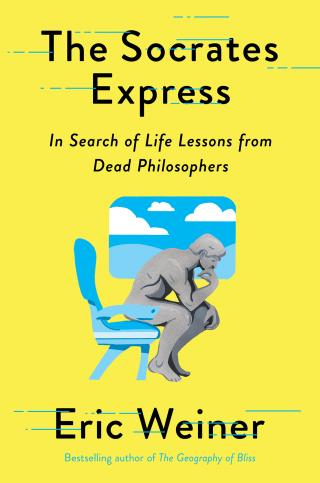
The Socrates Express
- Автор: Вейнер Эрик
- Год: 2020
- Язык: английский
- Год: Avid Reader Press / Simon & Schuster
- Жанр: География, путевые заметки

Электронная книга - «The Socrates Express». Краткое содержание книги:
We contemplate for the same reasons we travel: to see the world from a different perspective, to unearth hidden beauty and find new ways of being. We want to learn how to embrace wonder. Face regrets. Sustain hope.
Eric Weiner, *New York Times* bestselling author of *The Geography of Bliss* , combines his twin passions for philosophy and global travel in a pilgrimage that uncovers surprising life lessons from philosophers around the world, from Marcus Aurelius to Arthur Schopenhauer, Confucius to Montaigne. Traveling by train (the most thoughtful mode of transport) he traversed thousands of miles, making stops in Athens, Delhi,...
Gandhi’s vision for future of, 145, 155, 165, 167
independence movement in, 143, 155, 167
social inequality in, 149–50
Indian philosophy, 33, 57–58, 82, 92–93
indifferents, 227–28, 242
inductive reasoning, 21
industrialization, in India, 145
inertia, 7
information:
bombardment with, 124
data vs., 96
meaning vs., 22
wisdom vs., xiii–xiv
inner voice, 97
innocent ignorance, 19
inshallah (God willing), 236
insight, information vs., 96
insomnia, 9
instinct, 212
intellectual impatience, 131
intelligence:
of the heart, 51
noise tolerance and, 95
rational, 238
Intermittent Luxury, 233, 234
Internet, clamor of, 95–97
interpersonal relationships, 11–12
introverts, 273
intuition, 80
invisible-gorilla study, 295
Ionesco, Eugène, 262
Irvine, William, 226
Islam, 154, 236
Isocrates, 246
isolation, 68
Thoreau’s experiment in, 57, 59, 71
Itoya (stationery store), 191
Jain religion, 157
James, Henry, 57, 59
James, Henry, Sr., 59
James, William, 59, 93, 122–23, 129
Japan, xviii, 103, 183–84, 185, 187, 191, 197–98, 239
Jaspers, Karl, 19
jealousy, 226
Jefferson, Thomas, 111–12
Jennifer (author’s friend), 32–34, 218
Jerusalem Syndrome, 130
Jesus Christ, 173
Jews, Judaism, 160, 236
John of the Cross, Saint, 135
Journal of Happiness Studies, 107
joy, 248
retrospective, 259
in Stoicism, 160, 226, 235
Joyful Wisdom, The (Nietzsche), 211
judgments, 90, 172, 230–31
Junko (author’s friend), 198–99
junzi (superior person), 176
Just-a-Bit-More-ism, 116
just-so-ism, 189
Kailash (author’s friend), 143–52, 162, 164–68
kairos (appropriate time), 247–48, 264, 266
Kalyanam, Venkita, 297
kami (spirit), 190
Kant, Immanuel, 5, 46, 82, 91, 113, 174, 189, 249, 251
Karen (author’s friend), 226–27
Karr, Mary, 139
Kenkō, Yoshida, 190
Kepos (The Garden), 103–8
Keyserling, Hermann von, 275–76
kindness, 134, 169–81
kinetic pleasure, 109
King, Martin Luther, Jr., 159–60
Kington, Miles, xiii
Klein, Daniel, xvii
knowledge:
imagination vs., 52
information vs., 96
limitations of, 19
old age and, 255
senses in, 269
suffering and, 217–18
vision vs., 61
wisdom and, xiii–xiv, 19
Kreeft, Peter, 17, 30
Krishna, 154
La Boétie, Étienne de, 272, 273
Lao-Tzu, 174
Larkin, Philip, 49
Lascaux caves, 66
Lathe Biosas (Live in obscurity), 105
Lawrence of Arabia (film), 232
Lawrence, T. E., 141, 211, 232
Le Bon, Sylvie, 260–61, 301
Lenin, Vladimir I., 158
Lennon, John, 175–76
li (proper ritual conduct), 173–75, 176
life, reliving of, 207–8, 213–19, 287
life-span contextualism, 224
life stages, xviii–xix
listening, 77–97, 104
Lister, John, 89–90
list making, 184–85
by author, 195, 197–98
of Shōnagon, 187
logos (rational order), 226, 238
London Underground map, 132–33
Long, A. A., 230
losers, 139
loss, 138–42, 160, 184, 211, 224
adversity and, 239–42
love, 250
attention as, 125
family as basis of, 175
Gandhi on, 162–63, 167
luxury, 110
Macaulay, Thomas, 93
Magee, Bryan, 84, 93
Mahavira, 157
Mahler, Gustav, 90
Majer, Friedrich, 92
Makura no Sōshi, see Pillow Book, The
Manu (Gandhi’s grandniece), 148, 153, 165–66
Marcus Aurelius, 3–13, 17, 48, 50, 57, 78, 121, 214, 224, 235, 237, 239, 246, 271, 290
on death, 271
Thoreau compared to, 63, 64
Marriage Test, 216
masculinity, 152
masochism, 42
“massacre,” use of term, 301
mass executions, 158
masturbation, 17–18
Max Planck Institute for Human Development, 224
maybe-ism, 92
McKinney, Meredith, 187
McLynn, Frank, 9
medicine, philosophy compared to, 106
Meditations (Marcus Aurelius), 4, 9–10, 63, 224
melancholy, 15, 91
memories, 47, 122, 255, 258, 259
Mencius, 177, 180
mental noise, 95–97
Mercure de France, 45
Merle, Tom, 112–16
Merleau-Ponty, Maurice, xvi, 46
“metaphor,” origin of term, 34
Michelangelo, 262
Michinoku (paper type), 198
Mighty Pause (Socratic pause), 231, 232, 286
Mill, John Stuart, 36
Miller, Henry, 275–76
Miller, Webb, 158–59
minimalism, 141
misanthropism, 86
misdeeds, ignorance and, 26
misliving, xiv, xviii
Miss Oliver, 4, 11, 12–13, 101
mistakes, 216, 274
Monet, Claude, 262
Montaigne, Michel de, 75, 269–83
Montaigne’s tower, 273, 275, 282–83
morals, morality:
art and science and, 45
study and cultivation of, 177–78
mornings, 5–7, 9–13
Morris, Ivan, 192
motherhood, dysfunctional, 85
Môtiers, Rousseau’s aversion to, 43, 47, 50
Mott, John, 147
Mozart, Wolfgang Amadeus, 87
mujo (impermanence), 190
multitasking, 123–24
Murdoch, Iris, 132
music, 86–91
Myrmecia (Australian bulldog ant), 83
Nambikwara people, 253
Napoleon I, Emperor of the French, 124
narcissists, 132
nature:
author’s discomfort with, 42
author’s evolving appreciation of, 53–54
beauty of, 72–73, 237–38
death as part of, 278–79
health benefits of, 110
laws of, 287
living in accord with, 222–23, 233, 237–38
as mercurial, 278
Rousseau’s advocacy for, 42, 44, 53
Thoreau’s attention to, 67
near-death experience, 278, 281
Needleman, Jacob, 16–19, 27–28, 31–32, 104
negative effort, 129
Nero, Emperor of Rome, 229
news media, negative emphasis of, 178
New York City subway, 169, 173, 175–76, 179–81
nice, use of word, 203–4
Nicias, 29
Nietzsche, Friedrich, xvii, xviii, 29, 46, 87, 93, 188, 194, 203–20, 223, 235, 236, 264, 287
appearance and personal style of, 206
death of, 218
health issues of, 206–8, 209–10
insanity of, 218
pivotal moments for, 209–11
as walker, 46
writing style of, 211–13
noise pollution, 94–96
nonexistence, 106, 138
nonresistance, 158–59
nonviolence, 151, 155
of author, 152–53
origin of concept, 157
nonviolent resistance, 159, 160–61, 297
as active, 157–60
in everyday interactions, 163–65
Gandhi’s innovations in, 147
notebooks, author’s, 138–40, 184–85, 239
nothingness, 271
noumenon, 82, 213
NPR, 89, 130, 149, 185, 233
Nussbaum, Martha, 254
obligation, duty vs., 12
obstacles, 11
okashii (delightful), 188, 199
“On Authorship” (Schopenhauer), 95–96
“On Din and Noise” (Schopenhauer), 94
On Foot (Amato), 49
“On Old Age” (Cicero), 253
“On Suicide” (Schopenhauer), 79
On the Nature of Things (Lucretius), 111
“On the Shortness of Life” (Seneca), 120
“On the Suffering of the World” (Schopenhauer), 79
opinions, 31
de-caring about, 261–62
Shōnagon on, 188–89
optimism, 9
oracles, 19
otaku (geek), 198–99
overexamined life, 36
overthinking, 51
ownership, 239