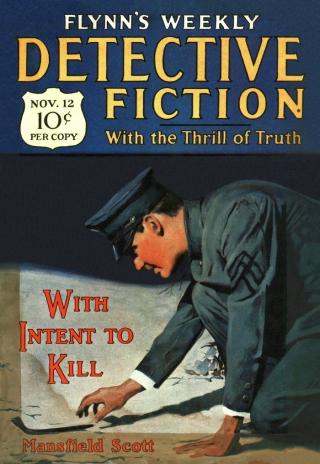
Flynn’s Weekly Detective Fiction. Vol. 28, No. 3, November 12, 1927
- Автор: Alexander R. W., Ames John
- Год: 1927
- Язык: английский
- Год: The Red Star News Company
- Жанр: Другие детективы

Электронная книга - «Flynn’s Weekly Detective Fiction. Vol. 28, No. 3, November 12, 1927». Краткое содержание книги:
Why, Ashurst churchyard was fair full of Landomeres. But they’d been gone this long time. Old Mrs. Fenley she did love to talk of ’em. Her folks had been something to the Landomeres in the old days. They’d come up when the Landomeres went down. Now they were gone, too.
Old Mrs. Fenley, she’d been dead forty years. The place came to her daughter then. Never married, Miss Fenley didn’t, no. Just bided about. There was some talk about her and parson once, but never came to nought. She was a queer one.
Reggie drove on to the house and was led over it by a dragon caretaker and wasted his time. The place was a shapeless patchwork of three centuries furnished in the worst Victorian manner. The awful portraits were all Fenley’s. Of departed Landomeres he found no trace.
The hireling car came back to the road and looked for Bell and his push bike, but in vain. Reggie laid a course for Ashurst church which proved hard to find.
Ashurst village consisted of a post office where lanes diverged to farms and scattered cottages. The church was reported a mile and a bit away by road, but there was a path through the woods. Reggie trudged on the footpath way.
Up and down among hornbeam and hazel he came out to the bare slope by which the woodland falls to the marsh and saw a little shingled spire.
Ashurst church stands on the edge of the high ground alone but for a vicarage of brownstone. Reggie climbed a steep path and by a cuckoo gate between ancient yews came into the churchyard. He looked across the marsh to the dim blue distance that was the sea.
In the wide sunlit prospect peewits were flashing and calling. It seemed to him no bad thing to be vicar of Ashurst. He sighed and applied his mind to business.
The churchyard was large and stretched to the very verge of its hill which fell away in a little sandstone cliff to the marsh. But in spite of the old lady at the lodge it was by no means full.
A big eighteenth century grave took his eye; a cubical structure of stone inside a railing, plainly a family vault. He came to it and on the crumbling top made out the Landomere lion fish and the vestiges of a Latin inscription: something about Gerardus eques et domina.
“Yes. Our Gerard’s in the mortuary,” he murmured. “And Sir Gerard and his lady are down there.”
He stood contemplating that ancient stone and the railing and the steps within it which led to an iron door into the earth. He turned away and wandered back over the close shorn turf to the neath path. Somebody was coming.
“Good day.” A little white-haired, — rosy-cheeked parson smiled and made him an old world bow. “Did you wish to see the church?”
“I should like to.”
“I shall be delighted to show it you. I am always so glad when visitors come to see my little church. We are so out of the world, I’m afraid many good people miss it. Quite a humble place, of course, but I do venture to think ra-ther beautiful, ra-ther beautiful.” He unlocked the door.
The church was an austere piece of early English. But the little parson had much more to say about it; of squint and rood loft, aumbry, east window, tower arch he chirruped.
Mr. Fortune said the right things and he beamed. So gratifying to talk to some one who understood; so rarely found them coming to Ashurst. Of course they were quite out of the world.
Mr. Fortune explained that he was just taking a run round the old country. An American, sir? No, no. From Canada. Been having a look at the old house that was on the market. They told him the church was worth seeing.
“Really! Really!” the vicar beamed. “Shall I be having you as one of my parishioners, sir?”
Reggie shook his head. “I didn’t take to the place myself. Not what I call old. I heard it was some real old family castle. What was the name? Land-us-here — something like that?”
The little parson looked bewildered. “Miss Fenley was the owner, sir. Quite an old family. The last of her line, poor lady. A sad pity. I expect the name you heard was Landomere. They have been dead and gone for centuries. Dear me, yes. The glory of this world passes away.”
He shepherded Reggie to the door. While he was locking it, Reggie strolled across the turf to some of the older graves. “Our little God’s acre, sir. A sweet quiet place.”
“Yes. Yes,” Reggie turned and surveyed it. “Thanks very much. It’s been most interesting.”
“Oh, not at all, not at all,” the little parson beamed. “I should thank you.”
“I was wonderin’,” Reggie murmured, “which is my best way. I left my car up on the road.” He looked at the pebbly track which curved past the vicarage and down under the cliff to run across the marsh. “Where does that go?”
“Oh, you were quite right, sir. That’s only a farm track. There is a charming footpath through the woods. I do hope you found it!”
“Yes. Charming. Yes. Many thanks. I’ll take that again.”
The little parson said good day and left him in the churchyard. He wandered among the graves, but he did not go back to the family vault of the Landomeres. Once, twice, and again he found the name of Akers.
He took the woodland path at speed. But the post office of Ashurst knew nobody called Akers.
VIII
Bell and the bicycle had not appeared to his chauffeur. The hireling car was driven hard back to Lythe and Mr. Fortune, pale and dreamy, filled the void of a lunchless day with a great many tea cakes.
But they brought no peace to his troubled mind. He watched the clock, he watched the street. “Damn Bell,” he murmured and sought the post office and the telephone.
“Fortune speaking. Have you got that valet yet? No? Don’t tell me Logan’s still close on him. I’m tired. I want some Lord High Muckamuck of the telephones to be at the Lythe to-morrow bright and early and do what I tell him. Anything else?
“Yes, thanks. I want three or four good men to report to Mr. French at the White Hart here to-morrow. Better come in a fast car. Who’s Mr. French? Me. What’s doin? I don’t know. But we’re close on it. No, Lomas, dear, not like Logan. Good-by. Pleasant dreams.”
He hurried back to the inn and there was relieved by the sight of Superintendent Bell swallowing tea in large gulps.
“Well, well, well,” said Reggie, and sank into a chair. “Arid are we still alive and see each other’s face? What have you been doing, Mr. Brown? I was afraid further complications had set in.”
Bell looked round the lounge. Bell edged his chair nearer. “You were all right, sir. I’ve had a line on you all day. Saw you in the churchyard. You didn’t see me. Found any more graves?”
“Yes. Yes. I found some Akers graves.”
“Akers! He was from down here, too? Good Lord! The more you get, the more it beats you. What is there about that church, Mr. Fortune?”
“I didn’t see anything myself,” said Mr. Fortune.
“All day long, one of the Verekers has been hanging round. When I followed you past the Vereker’s bungalow one of ’em was coming out, but he didn’t so much as look after your car.
“He went into the woods. When I got near him, he was away to one side of the church, sitting down. After awhile he moves on a bit, but always keeping close to the church and that house there. Farm, is it?”
“Vicarage.”
“Well, that’s how I’ve spent my day. The other one, a little chap with one arm, came along and relieved him just awhile ago. They’re up to something there.”
“Yes. Yes. That is indicated,” Reggie murmured. “I’m tired, Bell. Quite tired.” He lay back in his chair gazing with large melancholy eyes at the wall. “One large, long bath,” he murmured. “A light but nourishing dinner. And so to bed.”