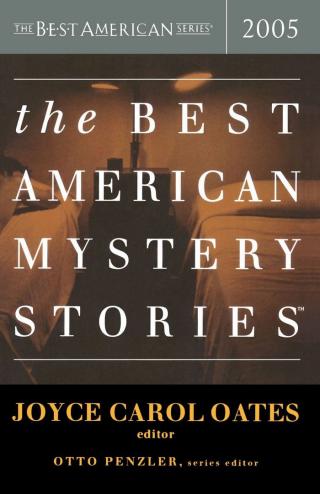
The Best American Mystery Stories 2005
- Автор: Хиггинс Джордж, Камински Стюарт Мелвин
- Год: 2005
- Язык: английский
- Год: Houghton Mifflin Harcourt
- ISBN: 978-0-618-51744-2
- Жанр: Другие детективы

Электронная книга - «The Best American Mystery Stories 2005». Краткое содержание книги:
Ahearn lifted his hand and slapped it down hard on Franklin’s shoulder. “You just shut your mouth, cotton-chopper. I got a wife and I got kids, and they go through groceries like they were lawn mowers. I’m on the earth this morning, not in it, and that is thanks to you. You did me one, I’ll do you one.”
“You’re gonna pay me, I assume,” Duggan said to Ahearn.
“Right,” Ahearn said. “Cup of coffee? I’ll go for a doughnut, even.”
“Nifty,” Duggan said.
Franklin looked up. There was misery all over his face. “He don’t want this case, Terry,” Franklin said. “I can’t pay him. You told me already, long before this, what a rat he is.”
Ahearn did not look at Franklin. He stared at Duggan instead. He spoke slowly and softly. “He is a rat, Roderick,” Ahearn said. “He walked a guy on me the last time I brought in a guy that should’ve burned, and then he laughed in my face afterwards. You did that, Duggan.”
“I did that, Ahearn,” Duggan said.
“Roderick,” Ahearn said, “this Duggan is the biggest rat in the Western world. He bites and he’s probably got rabies too. You need a rat, my friend. You need something that will bite and get the other guys infected. Duggan is your rat.”
Franklin looked up again. “I can’t afford to pay you anything, Mr. Duggan,” he said.
Duggan started to speak. Ahearn silenced both of them. “Nothin’ to worry about, Roderick,” he said. “Mr. Duggan isn’t charging for this one.”
“You’re not charging?” Franklin said.
“He’s not charging,” Ahearn said.
“I didn’t ask you,” Franklin said.
“I’m not charging,” Duggan said. “And the rest of what he said is also true.”
Duggan then spoke to Cynthia. “What bad things have happened today that I do not wish to know about but people called me about?”
Cynthia snapped her gum. Duggan said: “Don’t do that.”
She paid no attention to him. She riffled through a stack of telephone messages. “Well,” she said, “they’re mostly all from people in the court, and I’m not sure.
Duggan interrupted her. “It’s after six, for the luvva Mike, I’m at least three hours late, trying to get back to somebody in the courts.”
“There was one,” Cynthia said, reflectively, snapping the gum. “Said she’d wait for your call.”
“There’s a happy note,” Duggan said. “Who the hell was it?”
“Said her name,” Cynthia said, frowning, “said her name was Edie and you’d know her.”
“Edie,” Duggan said.
“Edie,” Cynthia said. “From the DA’s office.”
“Uh-huh,” Duggan said. “OK, I’ll call Edie from the DA’s office.” He turned to look at Ellis. “For your information, Mr. Ellis, Edie from the DA’s office is Assistant District Attorney Edith Washburn, and she has got a strong inclination to fit your very large tail into a very small crack. If it is all right with you, I will excuse myself for a moment and call her.”
Ellis stared at him. Ellis did not look happy. “You already kept me waiting a long time,” he said.
“Put it on my bill,” Duggan said.
The district attorney was Harold Gould. He was a large and powerful man in a large and powerful office. He was in his early sixties, and he knew what his values were. He also knew that some other people did not share his values, and he resented it. His office in the New Courthouse at Pemberton Square was spare. There was one glass-fronted bookcase which contained a selection of lawbooks that he had not opened in years. His diplomas from Boston College and the Harvard Law School were on the walls, along with his membership certificates in nine organizations. There were two pictures of Harold Gould shaking hands with John F. Kennedy. Harold Gould wore a PT-109 tie clasp. There were two pictures of Harold Gould with Richard Cardinal Cushing. There was one picture of Harold Gould with Francis Cardinal Spellman. There was a certificate attesting to the elevation of Harold Gould to the rank of Knight of Malta. There was a large oak desk that was covered with file folders. Harold Gould sat in an oak chair that creaked. His visitors sat in oak chairs that did not creak. Harold Gould, in the early evening, was not happy.
Edith Washburn was uneasy. She was in her early thirties and she had a lawyer’s job in a town full of lawyers; she wished to keep it. She disliked Harold Gould, who had appointed her to the job she wished to keep. Once married and divorced, with custody of a son who had not yet seen his sixth birthday and an ex-husband who had managed to elude his child-support payments — there had never been any alimony payments, because she was too proud to accept those or even ask for them — she needed the job that Harold Gould could take away from her if she became too saucy.
“You booted it,” Gould said. He had a voice with an edge like a pitted razor blade. “I told you I didn’t want that Ellis punk on the street.”
Edie controlled herself. “Boss,” she said, “I did not boot it. I am not Judge Wilcox. I did not release him on personal recognizance. I asked a hundred thou bail, and Judge Wilcox let him loose. Judge Wilcox is black. He thinks all defendants’re the unfortunate victims of society. That’s not my fault, either.”
“That punk,” Gould said, “is a murderer.”
She sighed. “So I’m told,” she said.
“He should be in jail,” Gould said.
“So I’m told,” she said.
“He isn’t,” Gould said.
“He hasn’t been convicted yet,” she said.
“Who’s got the case for trial,” Gould said.
“Judge Shanahan,” she said.
Gould nodded. “Good,” he said, “good. Shanahan’s a standup guy. No continuances. Get that little scumbag in here and convict him and put him in the damned can. Right?”
Edie sighed again. “Boss,” she said, “Duggan just got the case. He’s gonna want time to get ready. He’s gonna ask for it and Shanahan or any other judge’s gonna give it to him. The guy’s appointed, for God’s sake. He’s not making any money off this. He’s got to eat. He’ll be out on the street.”
“Who’d Duggan kill?” Gould said.
“Far as I know,” she said, “nobody.”
“Right,” Gould said. “So therefore I don’t care if Duggan’s onna street. I don’t like him, but he ain’t dangerous. Ellis is dangerous.”
Duggan tilted back in his desk chair and looked at Frederick Ellis with extreme distaste. The chair was a tufted Naugahyde Fames model. The desk was a large construction of blond mahogany. Ellis slouched in an armchair upholstered in nubby cerulean blue fabric, and smoked a thin cigar. The walls of Duggan’s office were absolutely bare, painted white, and somewhat dirty.
“You, my friend,” Duggan said, “you are more trouble’n you’re worth. That lady is really mad at you, and I think you are going to go away for a while if she has anything to say about it. Which she does.”
Ellis tipped the ash from the cigar onto the brown tweed rug. “I can do time,” he said.
“So can Big Ben,” Duggan said. “Any jerk can do time, just like any clock. Clocks’re made of metal. Some of them’ve got glass onna front. They’re made to do time.”
Ellis shrugged. “Maybe I was, too” he said.
“Maybe you were,” Duggan said. He allowed his shoulders to slump. “And in the meantime, I’ve got to do time for you, because that lady wants to see me. Tonight.”
In the remnants of the twilight, Frederick Ellis emerged from the door next to the bait shop, turned right, and walked rapidly along Gallivan Boulevard until he came to the International House of Pancakes. He stopped at the entrance to the parking lot and looked around. There was a maroon Cougar XR7 in one of the spaces, pointing toward the street. Ellis approached it, glanced around, opened the passenger door, and got inside.