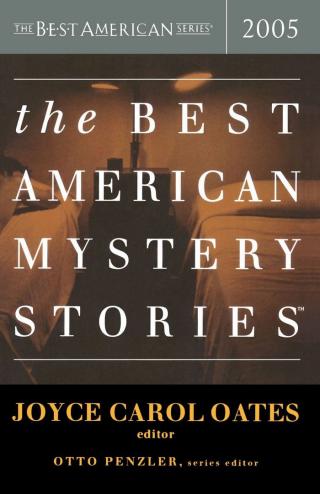
The Best American Mystery Stories 2005
- Автор: Хиггинс Джордж, Камински Стюарт Мелвин
- Год: 2005
- Язык: английский
- Год: Houghton Mifflin Harcourt
- ISBN: 978-0-618-51744-2
- Жанр: Другие детективы

Электронная книга - «The Best American Mystery Stories 2005». Краткое содержание книги:
“No,” Duggan said, “I went to your embalmer and told him I wanted the same discount special you bought.”
Shanahan began to laugh. “No respect for the court as usual, I see.” Waldstein pursed his lips and gazed disapprovingly at Duggan.
“Hiya, Sam,” Duggan said. “Didn’t notice you before. Course, you’re easy to overlook.”
Shanahan guffawed.
“I don’t think...” Waldstein said.
“I know it,” Duggan said. “You should try it some time. Whyncha beat it now, so I can talk to the judge. OK?”
Waldstein glanced toward Shanahan, who only smiled. Waldstein left chambers. Duggan took his chair.
“Tell me about this twerp Ellis,” Shanahan said. “We gonna belt this out or what?”
“Or what,” Edie said. “Gould wants a murder one.”
‘Wonderful,” Shanahan said. “Duggan?”
“Ellis says he’s innocent,” Duggan said.
“Trial, then,” Shanahan said. “Confound it. Blasted nuisance.” He pulled his calendar over and studied it. “This’s a pain in the neck, you know.”
“Life’s full of hardships, Your Honor,” Duggan said.
Duggan was at his desk. He was speaking urgently into the phone and the door to his office was closed. He said: “Look, honey, I’ll be there by five-thirty. I will really be there. You can count on it. I am not going to let you down.”
Frederick Ellis emerged in the darkness from the Sheraton Boston Hotel. He was wearing a leather car-coat and an anxious expression. He stood in the doorway and gazed at the street. The maroon Cougar came into view. It pulled up at the entrance. Ellis opened the passenger door and climbed in. “Francesco,” he said.
“Frederick,” the driver said. He was smoking a cigar. The car was filled with the smoke.
“Francesco,” Ellis said, “where the hell’re we going?”
“Frederick,” the driver said, “the Man is concerned. He is worried. Just like you wanted. He is just as worried as you are.”
“Now I am even more worried,” Ellis said.
“You must stop worrying,” Francesco said, putting the car in gear. “In the position you’re in, when you get worried, everybody else gets worried.”
The Cadillac slowed to a halt in the driveway of the yellow colonial garrison house in a western suburb of Boston. The side door, leading to the breezeway, immediately opened. A girl about nine years old came out. She was prancing. She wore a blue melton coat with red embroidery around the buttonholes and sleeves. She wore white knee socks and black Mary Janes. She had long blond hair and she wore barrettes. She began to run toward the car, but she had breath enough to scream. She screamed: “Daddy.”
Behind the girl there was a boy, about three years older. He came out more slowly, ushered by a woman who remained inside the jalousied breezeway, and shut the door behind him. He put his hands in his pockets and studied the sky for a while. He wore a tweed overcoat and L.L. Bean boots.
The girl embraced Duggan exuberantly. He was only halfway out of the car and he was off-balance, but he recovered himself and picked her off the ground. He hugged her and swung her. He carefully concealed from her the tears that came up in his eyes. He made his voice gruff and said: “Mark.”
The girl said: “I’m so glad to see you, Daddy.”
Duggan said: “Right. Get Mark.” He turned away from her. The boy came down the walk very slowly. The girl ran up to him and took him by the left hand. She skipped. He lagged. She brought him up to the car.
Duggan said: “Hi, Mark. Hungry?”
Mark stared at him for what seemed like several minutes. Then he said: “Can I have steak?”
“Sure,” Duggan said. He was forcing heartiness. “Gino’ll make braciole for you, we ask. Politely.”
The boy pondered that. He nodded. “I would like that,” he said.
Gino Ferraro was holding court at his restaurant, close by the Boston Garden. He wore a blue blazer and tan slacks and a red-striped tie. He needed glasses and he had had them made in gold-filled aviator frames. When Duggan and his kids came in, Gino was effusive. He said: “Annie. Mark. So good to see you.” They shook his hand. Gino said to Duggan: “Table for three, Jack?”
“Please,” Duggan said.
Gino clapped him on the back. “It’s good to see you, my friend,” he said. “When’re we goin’ the track?”
“Tomorrow is out,” Duggan said. “Police hearing. You hear about that guy Franklin?”
“Poor guy,” Gino said. He shook his head.
“I got him,” Duggan said.
“Poor guy, you,” Gino said. “He got any money?”
“If he has,” Duggan said, “he’s hangin’ onto it.”
“Ahh,” Gino said. He ushered them into the dining area.
He spoke to Mark. “And you, young man, are you goin’ the game?”
“Steak,” Mark said, as he sat down.
“Ahh,” Gino said, “braciolettine. And for you, Mr. Duggan?”
“Gimme a beer, Gino,” Duggan said.
“It’s a pleasure, Jack, see you with the kids in here,” Gino said.
Duggan slumped. “Out on dates,” he said. “Out on dates with my own damned kids.”
Gino patted him again. “It’ll get better, Jack. It’ll get better.”
Harold Gould had been to morning Mass and had a cup of coffee. He was dressed in a gray cheviot suit and he was madder than a hornet. He slammed his fist on the desk when he sat down in the creaking oak chair. He shouted at Edie Washburn. His face was inflamed and his veins stood out.
“I dunno,” she said.
“He isn’t here,” Gould said.
“He isn’t here,” she said.
“Can’t fool you, can they?” Gould said.
“Nope,” she said.
“Find him,” Gould said.
“OK,” she said.
“Find him before noon,” Gould said.
“This may be hard to do,” she said.
“Struggle,” Gould said. “Life is very hard.”
In the early morning, Walter Nolan stood with his shoulders hunched under the tan raincoat on the macadam launching ramp at the marina. There was some cold gray sunshine. There was an object floating in the water. It was Ellis. Edie Washburn stood next to him. She wore a tan raincoat.
“This,” Walter said, “does not look like a plea bargain to me, under any circumstances.”
“The defendant appears to be dead,” she said.
“Terminally dead,” Nolan said.
Duggan showed up at his office fairly early in the morning. He did not look good. Cynthia snapped her gum and snapped at him. “Hard night, Counselor?”
“Very,” he said.
“You should go home at night,” she said.
“I did,” he said.
“Frederick Ellis is dead,” she said.
Duggan sat down fast in the reception area. “Dead,” he said.
“Dead,” she said. She snapped her gum again.
“Cause of death?” he said.
“Gunshot,” Cynthia said. “He’s on the slab. Southern Mortuary.”
Duggan did not say anything for a while. “I appreciate the address. I don’t think I care to see him.”
“He didn’t pay ya, did he?” Cynthia said.
“Nope,” Duggan said, getting up.
“Then the hell with him,” Cynthia said. She went back to her coffee and her newspaper.
“Exactly,” Duggan said. “Exactly.”
The hearing room was windowless. The walls were walnut paneling, halfway up. Above waist level, the walls were white. They needed paint. The commissioner and two uniformed officers sat behind a long oak table. The commissioner wore a gray flannel suit and a stern expression. He said: “Mr. Duggan. Have you any more questions?”
Duggan turned and glanced at Franklin. Franklin shook his head once. Duggan turned back to the commissioner. “I have nothing further,” he said.