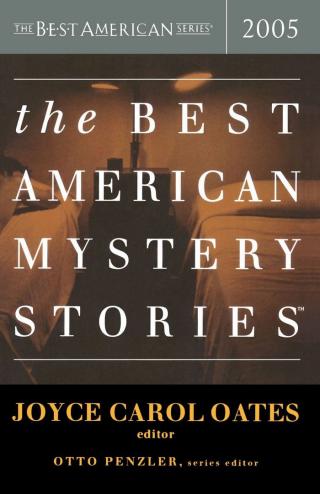
The Best American Mystery Stories 2005
- Автор: Хиггинс Джордж, Камински Стюарт Мелвин
- Год: 2005
- Язык: английский
- Год: Houghton Mifflin Harcourt
- ISBN: 978-0-618-51744-2
- Жанр: Другие детективы

Электронная книга - «The Best American Mystery Stories 2005». Краткое содержание книги:
“Jack,” she said, “I have some more bad news to improve your day.”
“Go ahead,” he said. “Everybody else has.”
“Gould won’t take a plea,” she said, “He wants murder one.”
The waitress limped down the aisle with Duggan’s drink. “Oh good,” he said as she arrived. “That is extremely good. That was just what I needed. I’ve got an unreasonable client and you’ve got an unreasonable boss.” The waitress set the drink down on the table. Duggan picked it up immediately and swigged from it. “Another one of these little buggers,” he said, “and some fried clams, french fries, slaw.” To Edie he said: “Order.”
“Same thing,” she said.
“Martini also?” the waitress said.
“White wine,” Edie said. “White wine.”
The Man was short and thin and wizened. He was in his late sixties. He had a shock of white hair that he combed straight back. He wore a white broadcloth shirt with a medium spread collar and a tie made of dark blue silk. He wore a well-cut Ivy-League suit, dark blue, just slightly nipped in at the waist. He wore black wing-tipped shoes. He sat behind an ornate antique desk, made of oak and carved with elaborate scrolling. He sipped at a pony of anisette and then from a cup of coffee. He did not show any expression on his face.
The cigar-smoking driver was in his middle forties, rather flush of face and somewhat overweight. He wore a blue blazer and tan slacks. He sat in an armchair, padded and then covered with tufted leather. Ellis had a straight chair opposite the driver.
“He is worried, Mr. Caruso,” the driver said. “Frederick here tells me that he is worried.”
Caruso shifted his gaze to Ellis. He spoke mildly. “Worry is bad for a man, Freddie. Worried people tend to die before their time.” Ellis’s tone betrayed considerable anxiety. He spread his hands and leaned forward in the chair. He spoke earnestly. “Mr. Caruso,” he said, “it is not just me who should be worried. Walsh should be worried and Charlie Carnival should be worried.”
“Walsh and Carnival are not around,” Caruso said. “They are vacationing and cannot be reached.”
“They should still be worried,” Ellis said.
“And Francesco,” Caruso said, nodding toward the driver, “should he be worried?”
“Probably,” Ellis said.
“And I, perhaps,” Caruso said, “should I perhaps be worried?”
“Considering what’s happening,” Ellis said, “you should think about it at least.”
Caruso glanced at Francesco. He looked back at Ellis. He leaned forward and steepled his fingers. “You have succeeded, Freddie,” he said. “Now I also am worried, and I am an old man who must think also of his health. How can we end all of this worry?”
“The cops haven’t got a hard case against me,” Ellis said. “They got all excited when they got the tip and they left a lot of things out.”
“Then there is no worry,” Caruso said.
“It’s the lawyers,” Ellis said. “This guy Duggan that I got is some kind of a crazy man, I think, and he is beating all over me that I am not telling him the truth. The DA is this broad that is beating all over Duggan because I will not plead out. One or the other of those damned lawyers is going to get all haired up and that will finish me off. The DA wants murder one. I do not.”
“What could you do, Freddie?” Caruso said it very softly.
“I could run,” Ellis said.
“Any man can run,” Caruso said. “The question is: how far?”
“I could go on vacation, like Walshie and Carnival,” Ellis said anxiously.
“I think that many people would miss you,” Caruso said.
Duggan was in the 99 Restaurant on Pearl Street in Boston. His red tie was loosened from his collar and his speech was somewhat slurred. He was drinking vodka martinis and he was talking to a small blond woman in her early twenties who had bleached her hair and gained a little weight since she had purchased her flowered blouse and tan skirt. She had undone the top three buttons of her blouse to avoid getting overheated. “You’re married,” she said.
“Yup,” Duggan said.
“My God,” she said, “I never thought I’d see the day when one of you guys admitted it. You still living with her, or what?”
“Yes,” he said.
“Yes what?” she said. “When you go home at night, do you go home at night or do you go somewhere else?”
“Yes, he said. “Depends on the night I do one or I do the other.”
“Hot damn,” she said. “Which you like better?”
“The other,” he said. “Much better.”
She linked her left arm through his right arm. “I think we could be friends,” she said.
“Until morning,” he said, thickly.
“With an option year,” she said, “like the other guys who play ball.”
Edie Washburn in the morning met Lieutenant Walter Nolan outside the District One Police Headquarters on New Chardon Street in the Government Center complex in Boston. “Lieutenant,” she said, “we have got to talk.”
Nolan was in his early thirties. He wore a plain tan raincoat and a somewhat mischievous expression. “This is so sudden, Edie,” he said. He smiled at her and stuck his hands in his pockets.
“Time passes so quickly when you’re having fun,” she said. She grabbed him by the left elbow.
“Whoa,” he said, pulling loose. “Not here in the middle of a public thoroughfare.”
“I’ve got to talk to you,” she said.
“Can we have some coffee, maybe?” Nolan said.
“Coffee,” she said, taking him by the arm again. “Now, walk, and let’s see if we can do that at the same time we’re talking.”
They headed up the hill on New Chardon toward Center Plaza. “Look, Walter,” she said.
“I have been,” he said.
“You’re married,” she said, “and I like Annie. This’s business. I think we have got a little problem with this Ellis guy.”
“He should faw down, go boom,” Walter said.
“He ain’t gonna,” she said grimly. “There’re two reasons why he won’t. There is Harold Gould. The second one is Jack Duggan.”
“He drew Duggan?” Walter said. “Son of a gun, I thought Duggan spent most of his time moaning and groaning about his life. He still alive?”
“Very much so,” she said. “Not only alive, but very well, thank you.”
“He hasn’t had a murder case in two, three years,” Walter said. “The heaviest thing he’s had, I heard about, was a couple smalltime hoods robbed a gas station, and that was about six months ago.”
“How’d it come out?” she said.
“Not guilty,” Walter said.
“You’re a detective,” she said. “That a clue to something, maybe?”
“Hell, Edie,” Walter said, “it wasn’t an ironclad case.”
“Is Ellis ironclad?” she said, pulling Nolan to a halt.
“No, Edie, for cryin’ out loud,” Walter said. “No case’s ironclad. You’ve been at this long enough to know that.”
“Right,” she said. “And so’s Duggan. And now let me tell you another thing: Gould won’t take a plea.”
“Oh, oh,” Walter said.
“I am going to have to try this case,” she said.
“Sounds like it,” he said.
“I have read the file again,” she said. “I do not feel cheerful.”
Mrs. Ellis was waiting in Duggan’s office when he arrived in the morning. She was wearing a nubby pale violet coat and a black pillbox hat and black sensible shoes. She had curled her hair. She sat clutching her black vinyl purse on her lap. As Duggan entered the office, she was glancing surreptitiously and disapprovingly at Cynthia.
Cynthia was drinking coffee from a paper cup. She slurped it. She was chewing gum at the same time and reading the paper.