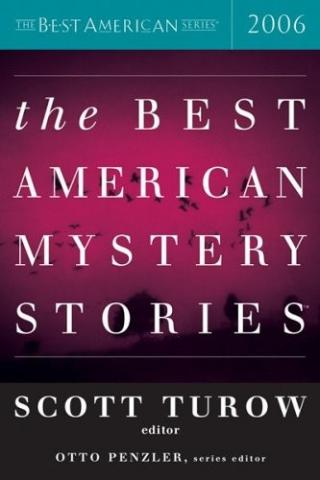
The Best American Mystery Stories 2006
- Автор: Дивер Джеффри, Хантер Эван
- Год: 2006
- Язык: английский
- Год: Houghton Mifflin Harcourt
- ISBN: 978-0-618-51746-6
- Жанр: Другие детективы

Электронная книга - «The Best American Mystery Stories 2006». Краткое содержание книги:
Riddle me how you would of acted in such a mangle. I could figure the law would be on me like ducks on a crippled June bug, so I rifled and skeltered the place till I found the wall board warped out from prizing. Back there was the money poke, sure as ramps root neigh creek, and I took half the eagles, thinking Ina would need some her own self. Then I lit out, not giving a back glance.
What come strange to my ears in the court was all these other tales spun concerning my rangering about in the weeks following. What I really done was leg it down to Vesuvius and wait under Orion and the bears on a steep where the train would stop to take on water for steaming up the grade. Once on, I rode all about, hopping off for provender and some loft sleep, but high-tracking it from Green Cove to Damascus, Bansock to Luray, Lithia back up to Second Pigeon, steering clear of Lexington and its ward. I rode the Norfolk and Western back and fro all over the mountains, breathing in the smoke whilst it shadowed laundry on the line by daylight, laying on my back to watch it silvering against black night. All my running mates from the N & WI would surprise at their lunch pails or when they were frying up corn dodgers at railside. They credited the story I have rendered you and gave me forage, but I will not raise their names in this matter, as I know the law’s grudges do not die off easy.
This is my honest story of how a misfortunate man come to be painted as desperado. They come after me in their black coats like corpse birds and sneaked up on me asleep by my fire. They beat me and gave me the boot, called me nigger and spat in my face. They shoved and cuffed my whole family, too.
This is how a man with no evidence against him got hunted down by a pack of bounty hounds. Scribe this down right, mister, and you can show it to whosomever might have an eye for justice, ‘cause the public needs knowing even too late to save my neck what manner of rascals ran their statutes and how a man can suffer evil though he swore on the preacher book and let only unscutched truth cross his red tongue. I’ll sing the devil this same tune tomorrow in his crowded coal hole, Mr. Prescott. A man in the derbies and the scaffold’s shadow has no call to throw the lie.
Oral History, Staunton, Virginia: Ina Grove Fell, 1964
When I came to a woman was screaming through the rain. That’s what I thought. I didn’t rightly understand where I was, the room blurry with a funny smell, but I could hear her voice, all fury. A light was coming through the apple tree and then the window, a green light, and I thought it was going to sift through me like some loose flour. Thirst was what I felt, almost that only. I thought the scream was going to shake me back to darkness, and I was shivering. Then I knew the woman was that blue jay nesting in the north haw. I smelled the hard smell and saw a rough face moving between me and the green light, and then I felt sore all over, a slow ache that went sharp in my fork. My knickers were gone entirely, and all my clothes. I was twisted in a robe like a Bible wife, but it was a quilt. Things started to remember. The face was moving, and something rusty was dried on my legs, and something else. This feeling had been upon me before, but never so severe. I thought I would die and I wanted to die. I wanted that jay woman to cease screaming, but I was crying to match her, and I thought another bird like some sparrow with purling notes should light in the apple tree any minute and trill out so its song might lift me or duck me under for good. I might just drink it and be drunk by it and rise up invisible as a ghost and shed all my troubles. Woe be.
That was a long time back, and I was only a girl who saw blackbirds in her mirror and eyes of a cat. Some things you misremember, and others shimmer and divide up. I think my daddy used to say we tell stories to forget what we need to get behind us, but I have never told this one, since I was spared most of court. What I swore then was what I thought, and though I had been something of a wild girl, nobody had the right to do me like that and go free. Since Uncle Leaf was dead, it was best to forgive him any trespass or unseemly reaching and move on. I did. I moved on. I know that Painter pushed at me before and pushed till I gave in listening to the yellow jackets drilling windfalls, a red color like off the ripe fruit overhead. When he was done I felt different with a hard rank smell on my clothes and salt in my eyes, but he gave no gentleness, saying all woman folk are born with the round heels. Then he galloused up and said he’d see me again, not even looking back. I hoped he’d never.
When I saw Uncle Leaf sprawled in the blood, his eyes were open and baleful, glaring fierce, and I did not know if he was alive or dead. Stop hexing me, I shouted, and the other face was still moving around me, about the house, its voice saying calming things, but I was not calmed.
Some times you don’t want to say a thing as it will loose a whole waterspill of words you can’t bear to hear, the rushing of every fear you’ve ever had burning as it crossed your tongue. I was wracked and damaged, and my only close kin looked dead, no matter how angry his eyes, no matter how little pity he’d showed in his life. The other thing in the room was gone then, but I could taste honey. The watchbird had screamed itself from blue to red, and then it fell off. I went swoony again and slid into the dark.
That night the Io moth came to my window like a mask, its buckeye eyes boring into me. I had been often accused of making flirtation and primping, but this was a new thing, and I did not take pleasure from any of it at all.
Those years I worked for Granny Kate with the stain on my name, most people showed kindness, and I learned the ways of her milk cows and how to churn. Flies would light in the cow pies and then on the bucket rim. People drank it anyway. They didn’t see. She gave me Chichester’s English Pennywort concoction with a paste of her own devising, and what made me swell seeped out one night, but not without pain of the damned. Granny taught me her potions and poisons and how to gather makings off in the forest. Also to read. Four years after the misdeeds I climbed up after a Christmas snow shower with a jug of coal oil and splashed it about inside the rubble of the old place. I set the match and stood back, shivering under a rind moon, watching the boards smoke and catch and blossom. It was time to sear the ghosts out, time to send my girlish wall etchings back to whence they came, though they had once been my only true friends. I knew the hive in the walls was still and the bees sleeping in their wax wouldn’t feel a thing.
Only the spy apple tree by the window caught the fire, its limbs spidery against the winter air and then glowing. The house shouted and crashed, black clouds coaxing night to hurry on, and when the roof caved, something inside me lifted, delivered me, and I was no longer so lost.
I became a woodsweed girl with pestle and mill and steam kettles, a whole cellar of concoctions, but when Granny Fell foxed out that my mama had passed over birthing me, she said I could be a thrush witch, named after the bush bird, and that was my main call, blowing the sick color from the throat of a child. I cut bloodroot and pulled sang. I gathered galax. I was a cat keeper and night-walker, a tender of gold bees, and I could sew and bantle, nurse and drive a nail straight to the heart. I was alone. I got by.