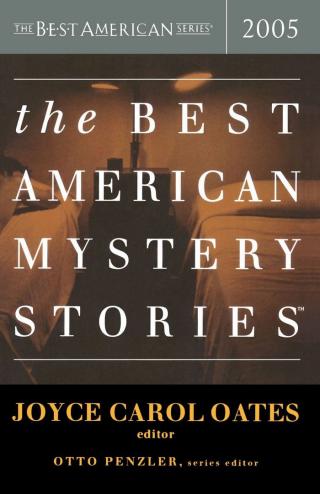
The Best American Mystery Stories 2005
- Автор: Хиггинс Джордж, Камински Стюарт Мелвин
- Год: 2005
- Язык: английский
- Год: Houghton Mifflin Harcourt
- ISBN: 978-0-618-51744-2
- Жанр: Другие детективы

Электронная книга - «The Best American Mystery Stories 2005». Краткое содержание книги:
He walked. Nice sunny day. Slight breeze. Crows cawing somewhere but he couldn’t see them. The streets were almost empty. He was just turning into the driveway of the Fair Breeze Condos on Second Street. A lady came out of the doorway, putting on white gloves as she walked toward him with a smile. She was a friend of Wally’s mother. Her name was Stella Armstrong.
“Wally,” she said.
“Mrs. Armstrong.”
“You visiting someone?”
“No,” he said. “I’m here to shoot John Roy Worth.”
Mrs. Armstrong thought Wally meant he was going to take the singer’s photograph. He wasn’t carrying a camera, but they were so small nowadays that you could carry one in your pocket. Wally was a painter, not a photographer, but maybe, Mrs. Armstrong thought, he took photographs and then went back and painted pictures from them — not that she recalled any paintings of real people Wally had ever done.
“Got to get to an appointment with my doctor,” she said apologetically. “I’ve got a thing on my back. Down here, you see? My best to your mother.”
Wally nodded and smiled at her as she passed him. She smelled like lilacs.
Now, if someone were to ask Wally why he wanted to kill John Roy Worth, he would have had an answer. He would have had a different answer for whoever asked the question. He had a list of answers in his head depending on the questioner and when they asked him. He wondered what, if anything, he would tell the police. He was curious about how the system would work once he was under arrest. He looked forward to being questioned, talking to a lawyer, getting a uniform, lying on a cell cot, going to trial. He would definitely plead “not guilty.” No plea-bargaining. What was the point in plea-bargaining when part of the point was seeing himself on trial?
He tried to hum “Hard-Drinking Woman” as he nodded at Richie Stawn, who manned the desk, wore a uniform, and was responsible for security. Richie liked his uniform, his job. Gave him plenty of time to write poetry. He had given a lot of it to John Roy Worth when the famous singer came to see his parents in Apartment 4G. John Roy had always taken the ring binder filled with what Richie was certain, or at least hoped, were lyrics for a big hit.
“Who you going to see, Wally?” Richie asked.
“Going to shoot John Roy Worth.”
“Little camera?”
“Yes,” said Wally, thinking only now that he should have brought a camera or something. He had not considered the possibility that people would think what he meant by shooting was something quite different.
Richie had been three years ahead of Wally at Lyndon Johnson High. They hadn’t been friends. They hadn’t been enemies. All they shared was the fact that neither participated in anything at school. Not football, baseball, basketball, wrestling, the photo club, the collectors club, the herpetology club, the Young Republicans, nothing. Wally had painted all the signs for school dances, elections, meetings, none of which he attended. Everything he had created had been thrown away or washed away by wind, rain, and time. All these years since he barely graduated, Wally had continued to do the signs for homecomings, graduation, the town’s annual Founder’s Day, the Prairie Flower Festival.
Reasons, Wally thought as he waited for the elevator, reasons he could have given had he been asked about what he planned to do in a few minutes:
John Roy Worth had been against the war with Iraq. He was unpatriotic.
John Roy Worth had done nothing for the very town in which he was born.
John Roy Worth took the Lord’s name in vain in his songs.
John Roy Worth fornicated.
John Roy Worth was planning something big and evil. Wally wasn’t sure what it was, but it was clearly spelled out in his songs.
John Roy Worth had one of those smug I’m-a-star faces that let you know he thought you were a dust mite and he knew something funny and embarrassing about you.
John Roy Worth’s death would make Wally famous for a little while. He’d be interviewed by Diane Sawyer just before the weather on Good, Morning America.
John Roy Worth’s death would put Wally in prison forever and he’d never have to make another decision again about much of anything. Maybe they’d let him paint signs till the arthritis got him the way it had gotten his father. Did they need someone to paint signs in prison?
These were all reasons he might give. One or two of them might even be right, or maybe not.
“Worths expecting you, Wally?” asked Richie.
“No.”
“Gotta call them up, then,” he said with a deep sigh, as if the sigh were a major task.
The elevator doors opened while Richie was dialing. Out stepped John Roy Worth. He was wearing a cowboy hat, nice tan one with a black band and a tiny feather. His face was shaved clean, a concession to his parents, because when he did his videos or TV appearances John Roy always looked like he needed a shave.
He was also wearing clean, new-looking jeans and a Dallas Cowboys shirt, not the T kind but a white one with a collar and just a little Dallas Cowboys insignia on the pocket.
He was smoking, looked deep in thought, didn’t see Richie or Wally. He walked past them toward the door.
“Mr. Worth,” Richie called.
John Roy paused and turned, his mind still somewhere, maybe upstairs with his parents, maybe in some studio in Nashville or in bed with some girl. He looked at Richie.
“Wally wants to shoot you,” Richie said. “That all right?”
John Roy Worth looked at Wally, head to foot, maybe recognizing something.
“Shoot me?”
“Picture, photograph, you know,” Richie explained.
Wally’s hand was in his pocket. The gun felt surprisingly warm. He imagined, tasted gunmetal in his mouth, on his tongue.
“Wally Czerbiak?” asked John Roy, taking a step toward Wally.
Wally nodded.
“You painted the horse on the sidewalk in front of Lyndon Johnson High for the homecoming when I graduated.”
“Yeah,” said Wally.
John Roy smiled. “Great horse. Forgot about that till just now. Funny how you forget things and they just come back.”
“I’ve got a poem about a horse,” Richie lied. “I can get it to you at the hotel before you leave.”
John Roy wasn’t listening.
“You still painting?” John Roy asked, taking a deep drag on his cigarette.
“Signs,” said Wally.
“That horse,” John Roy said, looking up at the ceiling, maybe trying to see the horse. “All white and wide-eyed. It had wings or a horn on its head or something.”
“Both,” said Wally. “A flying unicorn.”
“Flying unicorn,” John Roy repeated almost to himself.
“Well, I’ll be damned,” Richie lied again. “My poem is about a white flying unicorn.”
“It’d make a good album cover,” John Roy said, looking at Wally. “I could write a song about homecoming, that horse, Connie Appleton, but I wouldn’t use her name. You know.”
Richie sighed. He wasn’t getting through. He knew it. He was doomed to his uniform.
“You got a card?” John Roy asked.
“No,” said Wally.
‘Well, you can write your name and number down for me and I’ll have someone call you.”
“You’d forget,” said Wally. “You’d shove it in your pocket and forget and five months from now you’d forget why you wrote my name and number and throw it away.”
John Roy adjusted his cowboy hat and grinned.
“You may be right, but don’t count on it. You want to take my picture?”
“No,” said Wally, taking the gun out of his pocket and aiming it at the singer.
“Wally,” Richie cried out from behind the desk.
John Roy Worth looked at the gun and lost his grin.
“Hold it, Wally. I’ve got about five hundred dollars in my wallet. I’ll just pull it out and hand it over. Put the gun away and we’ll call it a loan, no, a first payment for the flying-horse album cover.”