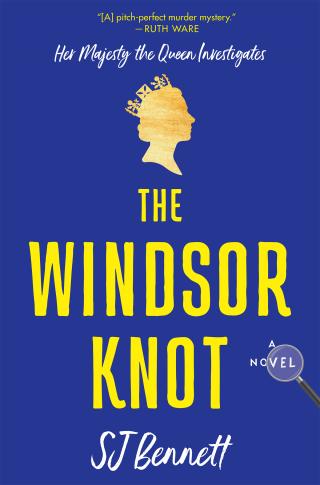
The Windsor Knot
- Автор: Беннет Си Джей
- Серия: Her Majesty the Queen Investigates #1
- Год: 2021
- Язык: английский
- Год: William Morrow
- ISBN: 978-0-06-305002-0
- Жанр: Другие детективы

Электронная книга - «The Windsor Knot». Краткое содержание книги:
It is the early spring of 2016 and Queen Elizabeth is at Windsor Castle in advance of her 90th birthday celebrations. But the preparations are interrupted when a guest is found dead in one of the Castle bedrooms. The scene suggests the young Russian pianist strangled himself, but a badly tied knot leads MI5 to suspect foul play was involved. The Queen leaves the investigation to the professionals—until their suspicions point them in the wrong direction.
Unhappy at the mishandling of the case and concerned for her staff’s morale, the monarch decides to discreetly take matters into her own hands. With help from her Assistant Private Secretary, Rozie Oshodi, a British Nigerian and recent officer in the Royal Horse Artillery, the Queen secretly begins making inquiries. As she carries out her royal duties with her usual aplomb, no one in the Royal Household, the government, or the public knows that the resolute Elizabeth will use her keen eye, quick mind, and steady nerve to bring a murderer to justice.
SJ Bennett captures Queen Elizabeth’s voice with skill, nuance, wit, and genuine charm in this imaginative and engaging mystery that portrays Her Majesty as she’s rarely seen: kind yet worldly, decisive, shrewd, and most importantly a great judge of character.
“When?”
“Yesterday.”
“You didn’t tell me.”
“It didn’t seem important.”
Sir Simon sighed. It wasn’t important, in the great scheme of things, but he was a control freak and that’s why he was so good at his job. He tried to relax and delegate. If you didn’t trust your subordinates, where were you? Even so, something rankled.
“How did Her Majesty know? About the invitation, I mean? I didn’t see anything.”
Rozie paused for half a second. Sir Simon saw every email, every log of every phone call, every message of any sort. And if he didn’t, he could check it out. He probably wouldn’t bother, but what if he did?
“I heard about Lady Hepburn’s brother from Lady Caroline.” She was improvising as she went. Sir Simon was not close friends with the Queen’s lady-in-waiting. She simply had to pray he wouldn’t check with her. In fact, Rozie had had a brief conversation with Lady Caroline about Lady Hepburn first thing this morning, but it had been the other way around: Rozie had engineered it, having noticed that they had houses near each other in Henley. She had wondered whether it might be presumptuous to assume rich, titled neighbors knew each other—but, no, that turned out to be a thing, and they were friends.
“Lady Hepburn’s brother died a few weeks ago, didn’t he? Heart attack in Kenya.” Sir Simon knew everything.
“Yes. And Lady Caroline said that Lady Hepburn was still very upset about it.” (She hadn’t.) “When I mentioned it to the Queen, she asked me to pass on her sincere condolences and when I did, Lady Hepburn invited her to tea and Her Majesty said yes.”
Was this even possible? Did such things happen? Rozie held her breath. Her heart hammered in her chest so hard she was sure Sir Simon would see it under her dress.
Sir Simon frowned to himself. This was most unusual. The Queen liked to visit Fiona Hepburn, but not on a whim. The Boss was not a whimsical person. How very odd. Perhaps it was a sign of advancing age. Not dementia, surely? No, that didn’t make sense at all. But there was something about Rozie that didn’t quite—
He stared at her for a moment. Rozie wouldn’t make anything up, surely? What would be the point? He made a mental note to double-check with the Queen that she really did want to go on this consolatory visit, and went back to his desk.
About an hour later, Rozie’s heart stopped hammering. She didn’t know whether to be very proud of herself or deeply ashamed. She had just lied to her immediate boss about the words and deeds of two lady aristocrats and the British monarch. In the privacy of the ladies’ loos, she sent her sister a Snapchat of various goggle-eyed expressions. Fliss would have no idea what it was about, but it helped.
The weekend was a difficult one. The Queen was already starting to notice the first ripples of a pebble dropped by MI5 into the Household pond.
The maid who delivered tea and biscuits to her bedside did so this morning with a doubtful expression and a biting of lip, suggesting huge discomfort and a need for reassurance. Had the Queen not known better, she would have asked a question and enabled a conversation. Usually, one could quickly solve the problem if one nipped it in the bud. But today she had no reassurance to offer.
Similarly, the page who later poured her Darjeeling in the breakfast room did so with a querulous look. She had known the man for years (Sandy Robertson; started as a beater at Balmoral; widower with two children, one of whom was at Edinburgh University studying astrophysics) and could easily read the unspoken message in his eyes: They’ve questioned me. And not just me. We’re all worried. What’s going on, ma’am?
The look she gave him back was just as easily translated: I’m sorry. It’s out of my hands. There’s nothing I can do. He nodded sadly as if they had actually exchanged words, and otherwise behaved with his usual calm efficiency. She knew he would report back to the servants’ quarters and the social club, though, and the news would not be good. Something was rotten in the state of Denmark and even the Boss could not guarantee it would blow over soon.
For the rest of the day, she felt the shadow of fear and uncertainty fall over the castle. She and her Household operated on a code of absolute loyalty: both theirs to her, and hers to them. They did not blab, did not sell stories to the Sun or the Daily Express, did not ask for or expect the exorbitant salaries they could command from the likes of Mr. Peyrovski, did not ask impertinent questions, or allow the inevitable belowstairs ructions or personal concerns to punctuate the smooth running of her affairs—or not often, anyway. In return, she respected and protected them, valued the sacrifices they made, and rewarded lifetimes of service with medals and other honors that were treasured far more than gold.
Foreign dignitaries, presidents, and princes marveled at the precision and attention to detail accorded to every aspect of their visits by these men and women. One’s family was jealous, frequently tried to steal some of the more exceptional stars, and occasionally succeeded. From Balmoral to Buckingham Palace, Windsor to Sandringham, the army of servants, hundreds strong, were family. They had nurtured her through ninety complicated years, been the buffer against the tides of disaffection that it sometimes pleased her subjects to display, and worked tirelessly to make a really rather difficult job at times look effortless. They worked on mutual trust, and now the Security Service was undermining it, one insidious interview at a time.
Still, the question remained: Had a member of the Household killed Brodsky? And, if so, why? Until she could answer it herself, she had to let Humphreys conduct his investigation in his own way.
On Sunday, the Queen was very pleased to escape the doom-laden atmosphere and accept Lady Hepburn’s kind invitation to tea at Dunsden Place, her small estate a few miles west, at Henley-on-Thames. They had been friends for decades, through Fiona’s tempestuous marriage to Cecil Farley in the fifties and sixties, her fascinating single years in the seventies, when she traveled the world on the arm of various eligible men, her quiet second marriage to Lord Hepburn in the eighties, and now her gentle widowhood.
Fiona was a good ten years younger than the Queen, but these days friends of one’s own age were like hen’s teeth—certainly those who retained their marbles—and it was a boon to talk to anyone who had lived through the war and shared the values that had pulled the country through.
She was also a gardener. The house—elegant Queen Anne with a spot of Jacobean folderol at one end and an unfortunate Victorian extension at the other—was in need of a little updating, but the garden was lovely. Fiona walked them through the house, looking pretty as ever with her white-blond hair piled high in a loose chignon, and a pair of baggy trousers showing only the faintest traces of soil.
Today, on a blustery weekend in April, vast pots of daffodils and narcissi glowed yellow and cream ahead of them against a verdant backdrop of box hedging and billowing topiary yew, through which one got the occasional glimpse of the river. Most people would have considered the day too cold to sit outside, but Fiona knew her guest, and had ordered homemade scones and prize-winning raspberry jam to be served on the terrace overlooking the parterre, with thick Kashmiri blankets for their knees and plentiful supplies of hot tea.
The Queen’s driver waited in the kitchen and her protection detail blended into the background, just out of earshot, refusing all offers of refreshment. The only other people outside were Fiona herself, Rozie Oshodi, and a bearded man in his midforties, in a tweed suit and tie, seated at a large teak table on the terrace. He rose to his feet as soon as they arrived.