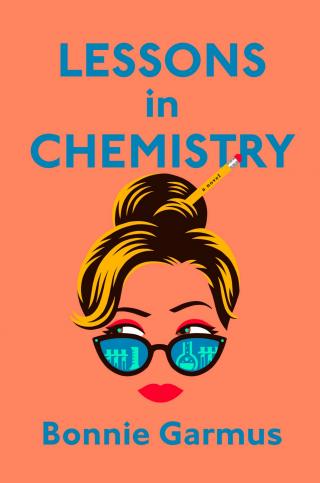
Lessons in Chemistry
- Автор: Garmus Bonnie
- Год: 2022
- Язык: английский
- Год: Doubleday Canada
- Жанр: Современная русская и зарубежная проза

Электронная книга - «Lessons in Chemistry». Краткое содержание книги:
“Good gravy, no!” Harriet said as she adjusted the rearview mirror. “If she knew, would we be doing this?”
“But won’t she be mad?”
“Only if she finds out.”
“You did a pretty good job on her signature,” Mad said, examining the note Harriet had written to get Mad out of school. “Except for the E and the Z.”
“Well,” Harriet said, irritated, “aren’t I lucky the school doesn’t employ forensic handwriting experts.”
“You really are,” Mad agreed.
“Here’s the plan,” Harriet said, ignoring her. “We stand in line like everybody else, and once in, make a beeline for the back row. No one ever goes for the back row. We want to sit there because should something go wrong, we’ll be right next to the emergency exit.”
“But the emergency exit is only to be used for emergencies,” Mad said.
“Yes, well, if your mother spies us, that qualifies as an emergency.”
“But the doors will be armed.”
“Yes — another bonus. Should we have to make a quick exit, the noise will distract her.”
“Are you sure we should be doing this, Harriet?” Mad said. “Mom says a TV studio isn’t safe.”
“Nonsense.”
“She says it’s—
“Mad, it’s safe. It’s an environment for learning. Your mother teaches cooking on TV, doesn’t she?”
“She teaches chemistry,” Madeline corrected.
“What kind of danger could we possibly encounter?”
Madeline looked out the window. “Excess radioactivity,” she said.
Harriet exhaled loudly. The child was turning into her mother. Normally this sort of thing happened later in life, but Mad was way ahead of schedule. She thought about Mad being all grown up. If I’ve told you once, I’ve told you a thousand times, she’d shout at her own child. Never leave a Bunsen burner unattended!
“We’re here!” Mad suddenly erupted as the studio parking lot came into view. “KCTV! Oh boy!” And then her face fell. “But, Harriet, look at the line.”
“I’ll be damned,” Harriet swore as she took in the mass of humanity snaking around the parking lot. There were hundreds of people, mostly women with purses sitting heavily on sweaty forearms, but also a few dozen men with suit jackets dangling from two fingers. Everyone used a makeshift fan — maps, hats, newspapers.
“Are they all here for Mom’s show?” Madeline said, awestruck.
“No, honey, they tape lots of shows here.”
“Excuse me, ma’am,” a parking lot attendant said, signaling Harriet to stop. He leaned in on Madeline’s side, “but didn’t you see the sign? Lot’s full.”
“All right, then, where should I park?”
“Are you here for Supper at Six?”
“Yes.”
“I’m sorry to hafta tell you, then — you won’t get in,” he said, gesturing at the long line. “These people, most of them are here for nothing. People start lining up at four a.m. Most of the studio audience has been selected already.”
“What?” Harriet exclaimed. “I had no idea.”
“Show’s popular,” the man said.
Harriet hesitated. “But I took this child out of school for this.”
“Sorry, grandma,” he said. Then he leaned farther into the car. “Sorry to you too, kid. I turn away a lot of people every day. Not a fun job, believe me. People yell at me all the time.”
“My mom wouldn’t like that,” Mad said. “She wouldn’t like anyone yelling at anyone.”
“Your mom sounds sweet,” the man said. “But could you move it? I got a lot more people to turn away.”
“Okay,” Mad said. “But could you do me a quick favor? Could you write your name in my notebook? I’ll tell my mom how hard it is out here for you.”
“Mad,” Harriet hissed.
“You want my autograph?” He laughed. “Well that’s a first.” And before Harriet could stop him, he took the notebook from Mad and wrote Seymour Browne, careful to use the lines in her school notebook that showed just how high the tall letters should be and just how small the small letters should be. Then he closed the notebook, the two words on the cover jolting him like a loose electrical wire.
“Madeline Zott?” he read incredulously.
—
The studio was dark and cool, with thick cords running from one end to the other and huge cameras on either side, each primed to swivel and record what the lights from above illuminated.
“Here we are,” Walter Pine’s secretary said, ushering Madeline and Harriet to a pair of suddenly vacant seats in the front row. “Best seats in the house.”
“Actually,” Harriet said, “would you mind? We kind of had our hearts set on sitting in the back.”
“Oh gosh no,” the woman said. “Mr. Pine would kill me.”
“Someone’s going to die,” Harriet murmured.
“I like these seats,” Madeline said, sitting down.
“Seeing a show live is very different from watching it at home,” the secretary explained. “You’re not just seeing the show anymore — you’re part of it. And the lights — they change everything. I guarantee, this is the place to sit.”
“It’s just that we don’t want to distract Elizabeth Zott,” Harriet said, trying again. “Don’t want to make her nervous.”
“Zott, nervous?” The secretary laughed. “That’s funny. Anyway, she can’t see the audience. The set lighting blinds her.”
“You’re sure?” Harriet said.
“Sure as death and taxes.”
“Everyone dies,” Mad pointed out. “But not everyone pays their taxes.”
“Aren’t you a precocious little thing,” the secretary said, her voice suddenly irritated. But before Madeline could offer some statistics on tax evasion, the quartet launched into the Supper at Six theme song and the secretary disappeared into the ether. From off to the left, Madeline watched as Walter Pine settled into a cloth-backed chair. He gave a nod, then a camera rolled into position, then a man wearing headphones gave a thumbs-up. As the song reached its final measures, a familiar figure strode like a president to the podium, her head held high, posture erect, hair aglow under the bright lights.
—
Madeline had seen her mother in a thousand different ways — first thing in the morning, last thing at night, leaning away from a Bunsen burner, peering into a microscope, facing off with Mrs. Mudford, frowning into a powder-filled compact, coming out of the shower, gathering her in her arms. But she had never seen her mother like this — never, ever like this. Mom! she thought, her heart swelling with pride. Mommy!
“Hello,” Elizabeth said. “My name is Elizabeth Zott, and this is Supper at Six.”
The secretary was right. There was something about the lights, the way they revealed things that the grainy black and white at home could not.
“It’s steak night,” Elizabeth said, “which means we’ll be exploring the chemical composition of meat, specifically focusing on the difference between ‘bound water’ and ‘free water’ because — and this may surprise you,” she said, picking up a large slab of top sirloin, “—meat is about seventy-two percent water.”
“Like lettuce,” Harriet whispered.
“Obviously not like lettuce,” Elizabeth said, “which contains far more water — up to ninety-six percent. Why is water important? Because it’s the most common molecule in our bodies: sixty percent of our composition. While our bodies can go without food for up to three weeks, without water, we’re dead in three days. Four days max.”