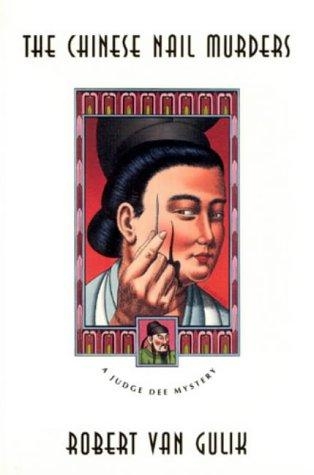
The Chinese Nail Murders
- Автор: ван Гулик Роберт Ханс
- Серия: Judge Dee #5
- Язык: английский
- Жанр: Другие детективы

Электронная книга - «The Chinese Nail Murders». Краткое содержание книги:
Judge Dee is appointed to the magistrate of Pei-chow—a distant frontier district in the barren north of the ancient Chinese Empire. It is here that he is faced with three strange and disturbing crimes: the theft of precious jewels, the disappearance of a girl in love, and the fiendish murder involving the nude, headless body of a woman. And even more curious, the crimes seem to be linked together by clues from a popular game of the period, the Seven Board.
First published in the 1950s, The Chinese Nail Murders includes charming illustrations and an epilogue that details the origins of each case and how the author discovered them.
Did the old scribe appearing in The Chinese Gold Murders really change on occasion into a were-tiger? In that case it was he who was seen in the forest by Judge Dee and his two hefty lieutenants. If, on the other hand, the reader refuses to admit the existence of were-animals, then Judge Dee saw a real tiger, which had a white spot on its paw that caused it to be mistaken for a white, human hand. And in that case the old scribe's confession can be dismissed as the vagaries of an old man's diseased mind. As to the ghostly apparitions mentioned in that novel, those find in the end their perfectly natural explanation—all except one, that is!
Finally, the henpecked husband who relates the opening passage of the present novel, The Chinese Nail Murders, had that evening been engrossed in his research on Judge Dee, and he had directly thereafter written a long letter to his beloved brother. Did he really meet the latter's ghost in his garden pavilion? Or was it but a dream, whereto Judge Dee, his brother and his own argumentative First Lady (Mrs. Loo of the novel) each contributed their share?
All these puzzles end up with the very same question mark as do most personal problems we are confronted with by this perplexing life of ours. And probably this was so disposed for our good.
Dr. R. H. van Gulik