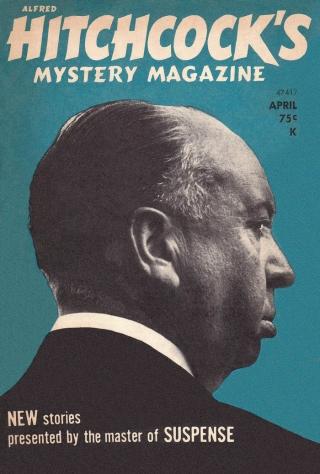
Alfred Hitchcock’s Mystery Magazine. Vol. 17, No. 4, April 1972
- Автор: Breese Edward Y., Бриттен Уильям
- Год: 1972
- Язык: английский
- Год: H.S.D. Publications
- Жанр: Другие детективы

Электронная книга - «Alfred Hitchcock’s Mystery Magazine. Vol. 17, No. 4, April 1972». Краткое содержание книги:
“Is that the official designation?” she asked. “Oregon State Parole Board?”
“Yes,” I said, and then I acted uncertain. “At least I think it is. I’ve got Zander’s letter here somewhere but I just can’t put my finger on it at the moment. Secretary’s on vacation, you know. Anyway, it’s the Oregon State Parole Board or something close to that, and I’m pretty sure it’s in Salem. Or possibly Portland?”
After about five minutes of negotiations between long-distance operators, I was connected with a Mr. Hendricks who held a responsible position in matters relating to parole.
“Do you have a parole officer named Zander?” I asked.
“Oh?” he said. “You a friend of his?”
From the tone of his voice, I immediately gathered that it might not exactly be upward to be a friend of Zander’s.
“By no means,” I said. “I’m with Delta Collections. Could I speak to Mr. Zander for a moment now?”
“Delta Collections? Well, well. And you want to speak to him?”
“If I could.”
He seemed to chuckle. “I guess you could, all right. On visiting day. He’s an inmate in the state prison.”
I was properly shocked. “A parole officer in jail? How could that happen?”
“He was put away on half a dozen charges, including blackmail of the parolees in his charge, juggling of department funds, moral turpitude, and what have you.”
“Blackmailing parolees?”
“That’s right. By threatening to report that they violated their paroles unless they paid up.”
I became obviously outraged. “Someone should have slugged him.”
“Someone did.”
“Really?”
“An ex-con named Neilson. I guess Zander tried to blackmail the wrong man. Neilson blackened one of Zander’s eyes and knocked out three teeth.”
“I suppose that put poor Neilson back in jail?”
“No. He just plain disappeared. Probably figured that it was his word against that of a parole officer and he didn’t stand a chance. Haven’t seen hide nor hair of him since.”
“When you do find Neilson, he goes back to a jail cell at once?”
“For slugging Zander? Hell, no. At the time, maybe, but not with what we know about Zander now.”
“So there’s nothing outstanding against Neilson?”
“Nothing. Unless maybe we charge him with theft.”
“Theft?”
He chuckled again. “For stealing a state employee. Marie Brennan was her name. She was the chief veterinarian at the state prison farm where Neilson served most of his time. They got pretty well acquainted while he was there and I heard they were planning to get married. The day after Neilson disappeared, she resigned her job and disappeared. I have the hunch that if we ever find Neilson, we’ll also find her.”
I had that hunch myself. “Well, I guess Delta Collections can kiss off Zander?”
“I guess so,” Hendricks said.
I hung up.
So Uncle Charles didn’t have to hide, but he didn’t know it yet. I could see where the jailing of a parole officer in Oregon wasn’t too likely to make the papers here or in Minnesota.
Now he could shave off that beard if he wanted to and enter state archery tournaments and get his picture in the newspapers.
I resisted the temptation to phone him and tell him the good news. I would tell Ariana first and let her pass it on to Neilson. Besides, it gave me an excuse for seeing her again tonight.
When I got to my apartment after five-thirty that afternoon, my daily newspaper lay before the door as usual.
I picked it up and stared at the front-page picture of Randall Clay.
The explaining columns were liberally sprinkled with ‘allegeds’, but they did convey the information that Randall Clay had been married at least five times previously, each time under another name, and it also appeared that all of those wives had mysteriously disappeared after withdrawing their savings from their banks.
Clay’s fingerprints had been picked up in the residences of his previous wives and had been on national file. His photograph had also been identified by a number of grieving in-laws.
My phone rang.
I quickly unlocked my apartment door and picked up the receiver.
It was Ariana and she was quite excited. “Did you see this evening’s paper?”
“Yes. As a matter of fact, I did.”
“What in the world made Clay come down here?”
I wanted to tell her about Clay, and about Uncle Charles, and I wanted to ask her if she thought a private detective who specialized in messy divorce cases could make a living in St. Paul. But there are some things you just cannot handle properly by phone.
“I’ll be over in ten minutes,” I said, and hung up.