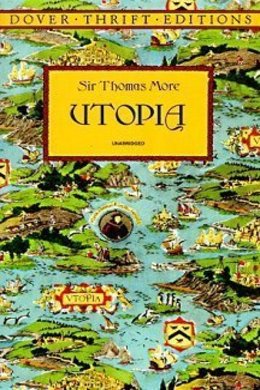
Utopia
- Автор: Мор Томас
- Год: 2014
- Язык: английский
- Год: epubBooks Classics
- Жанр: Европейская старинная литература

Электронная книга - «Utopia». Краткое содержание книги:
"I do not doubt but rich men are sensible of this, and that they well know how much a greater happiness it is to want nothing necessary, than to abound in many superfluities; and to be rescued out of so much misery, than to abound with so much wealth: and I cannot think but the sense of every man's interest, added to the authority of Christ's commands, who, as He was infinitely wise, knew what was best, and was not less good in discovering it to us, would have drawn all the world over to the laws of the Utopians, if pride, that plague of human nature, that source of so much misery, did not hinder it; for this vice does not measure happiness so much by its own conveniences, as by the miseries of others; and would not be satisfied with being thought a goddess, if none were left that were miserable, over whom she might insult. Pride thinks its own happiness shines the brighter, by comparing it with the misfortunes of other persons; that by displaying its own wealth they may feel their poverty the more sensibly. This is that infernal serpent that creeps into the breasts of mortals, and possesses them too much to be easily drawn out; and, therefore, I am glad that the Utopians have fallen upon this form of government, in which I wish that all the world could be so wise as to imitate them; for they have, indeed, laid down such a scheme and foundation of policy, that as men live happily under it, so it is like to be of great continuance; for they having rooted out of the minds of their people all the seeds, both of ambition and faction, there is no danger of any commotions at home; which alone has been the ruin of many states that seemed otherwise to be well secured; but as long as they live in peace at home, and are governed by such good laws, the envy of all their neighbouring princes, who have often, though in vain, attempted their ruin, will never be able to put their state into any commotion or disorder."
When Raphael had thus made an end of speaking, though many things occurred to me, both concerning the manners and laws of that people, that seemed very absurd, as well in their way of making war, as in their notions of religion and divine matters—together with several other particulars, but chiefly what seemed the foundation of all the rest, their living in common, without the use of money, by which all nobility, magnificence, splendour, and majesty, which, according to the common opinion, are the true ornaments of a nation, would be quite taken away—yet since I perceived that Raphael was weary, and was not sure whether he could easily bear contradiction, remembering that he had taken notice of some, who seemed to think they were bound in honour to support the credit of their own wisdom, by finding out something to censure in all other men's inventions, besides their own, I only commended their Constitution, and the account he had given of it in general; and so, taking him by the hand, carried him to supper, and told him I would find out some other time for examining this subject more particularly, and for discoursing more copiously upon it. And, indeed, I shall be glad to embrace an opportunity of doing it. In the meanwhile, though it must be confessed that he is both a very learned man and a person who has obtained a great knowledge of the world, I cannot perfectly agree to everything he has related. However, there are many things in the commonwealth of Utopia that I rather wish, than hope, to see followed in our governments.