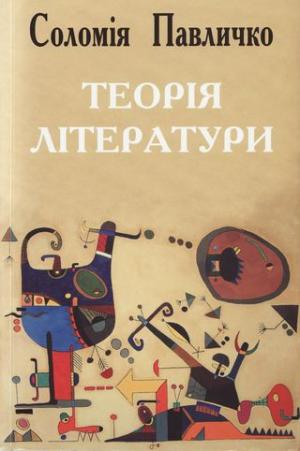
Теорія літератури
- Автор: Павличко Соломія Дмитрівна
- Год: 2009
- Язык: украинский
- Год: Видавництво Соломії Павличко "Основи”
- ISBN: 978-966-500-307-6
- Жанр: Критика

Электронная книга - «Теорія літератури». Краткое содержание книги:
Для широкого кола читачів.
* * *
«Літературно-теоретичні та літературознавчі статті й дослідження Соломії Павличко сприяли створенню нового рецепційного клімату для трансформації нашого сприйняття української літератури і, поза всіляким сумнівом, розширили наш горизонт літературних сподівань. Інтелектуальне багатство, динамізм літературно-теоретичних пошуків, постійний творчий неспокій, непересічність мислення, наскрізь модерне світосприйняття засвідчили, що Соломія Павличко відкрила простір нових можливостей для українського літературознавства XXI сторіччя».
Марія Зубрицька
Кожна культура складається з двох сфер — сакральної і профанної, «верху» та «низу», елітарної і масової. Естети і сноби можуть назвати масову літературу низькопробною, однак відмінити її існування не в силах. В українській літературі довгий час не було ні яскраво вираженого «верху», ні тим більше «низу», хоча вона довго намагалася культивувати саме «верх». Однак дуже серйозна, моральна і моралізаторська, політична і ще частіше патетична література, присвячена служінню народові чи суспільній меті, не могла породити ні елітарного письма на зразок Джойсового «Уліса», ні розважального, на зразок Агати Кристі.
Теперішня свобода і загалом політична ситуація незалежності стали для української літератури своєрідним шоком. Цей шок мав багато аспектів, проте не останнім з них виявилася криза національного книговидання і завоювання ринку з боку західної розважальної літератури не найкращої якості, головним чином перекладеної з англійської на російську мову.
Андрій Кокотюха — один з небагатьох дебютантів української літератури працює в розважальному жанрі і прагне дотриматися його чистоти. Його піджанр — детектив, кримінальна історія. Ця кримінальна історія ще недосконала, її авторові ще далеко до метрів детективу, таких, як уже згадувана Агата Кристі, Жорж Сименон чи ряд сучасних класиків цього жанру. Однак привабливою стороною повісті Кокотюхи є місцевий колорит і те, що події відбуваються в реаліях знайомого для читача життя. Крім того, автор уміє будувати цікаві сюжети, захоплювати читача своєю інтриґою. А для читача це дуже важливо, адже він любить і заплутане плетиво кримінального сюжету, і впізнавати знайомі ситуації, і радіти, розгадавши розвиток колізії.
Дебют Андрія Кокотюхи великою мірою символічний. Масова розважальна культура неуникненна. Якщо національна культура неспроможна її продукувати, то вона приходить з інших країн і культур.
Перші повісті Андрія Кокотюхи демонструють задатки на серйозного письменника-криміналіста, популярного і продуктивного у майбутньому. Побажаємо йому успіхів.
1996
Facing freedom: the new ukrainian literature
In the decade since Gorbachov’s perestroika, the new Ukrainian literature has enjoyed an atmosphere of freedom it hasn’t known for centuries. Many writers, however, experienced that freedom well before the country declared independence in 1991. Indeed, it was largely the inner freedom felt by writers and the intelligentsia that led to independence.
The evolving literary culture has no clear contours. A spate of aesthetic possibilities flooded the mainstream simultaneously and those writers not lost in the rapids suddenly found themselves afloat on what Jefferson called «the boisterous seas of liberty» When they were finally cast ashore, they were like survivors of several shipwrecks who rush to greet each other only to discover that they barely share a language. These newly surfaced writers emerged from radically different circumstances. What could they have in common, these former dissidents and ex-Communists, the psychically scarred and the prodigies of privilege? Two things, anyway. All had stories to tell and, for the first time, all had the chance to compete for an audience.
The previous decade had been ugly. The Seventies were years of vicious repression and political pressure. Few risked open protest. At the same time, an artistic underground was gestating. Its ideas were grounded in Eastern philosophies stressing the autonomy of the individual, of an identity separate from society.
A philosophical and formal orientalism remains an essential characteristic of Oleh Lysheha, who in the mid-Seventies was involved in an attempt by young intellectuals from Lviv to publish the unofficial journal Skrynia (The Chest). Another group, whose best known members were Mykola Vorobyov and Vasyl Holoborodko, passed poems among a small circle in Kyiv. Then there were the so-called «metaphorists»: the most original writers here were Vasyl Herasymiuk, Ihor Rymaruk, and Ivan Malkovych. Finally, the youngest generation fixated on the shattering of taboos in the spheres of language, theme, and form. The most skillful riders of this wave — Yuri Andrukhovych, Viktor Neborak, and Oleksandr Irvanets — announced their existence openly, calling their group Bu-Ba-Bu (which stands for Burlesque-Bluster-Buffoonery). The movements tended to overshadow writers who belonged to no school and subscribed to no ideology. Many of these loners happened to be women; Natalka Bilotserkivets, Liudmyla Taran and Oksana Zabuzhko are the most prominent. But there were also men, including Oleksander Hrytsenko and Attyla Mohylnyi.
Moreover, publication of the forbidden classics of Ukrainian literature from the last centuries compelled virtually every writer to reconsider their place on the continuum of letters.
The eclecticism of the scene was reflected in the first, informal literary journals that appeared in the mid-Eighties. These were most often typewritten in many carbons, rendering some of them nearly illegible. And yet they were passed from hand to hand and widely discussed. Two places in Kyiv where it was possible to meet the writers themselves were the apartment of Mykola Riabchuk, a critic, poet, prose writer, editor, publisher, and above all the catalyst for a new generation; and in the office of Ihor Rymaruk, who remains the poetry editor for the «Dnipro» publishing house. Informal literary readings first took place in the rooms and studios of individual writers and artists, among a narrow circle of friends, spreading gradually and semi-officially to various public lecture halls and finally ending up at the Writers’ Union. The events electrified both writers and audiences, who understood that they were participating in a political and aesthetic metamorphosis. It later became clear that these two not necessarily concentric revolutions had occurred simultaneously; both had great significance and helped free the culture from all manner of conventions, restrictions, and recipes.
Young writers held evening readings of erotic poetry — that it was suddenly possible to write about sex intoxicated them. This had, after all, been a forbidden subject since the Twenties. Moreover, one could write about the military, the brutality and violence of the Soviet regime, and about Lenin-Stalin-Trotsky and other related figures. Finally, writers needed to formulate some version of their national history. Was Ukraine an occupied territory, or had communism been a stabilizing agent binding together a heterogeneous population? What was Ukraine really like? What relationship did it bear to the country refigured by folk stories, or by the intelligentsia in the diaspora? And what was «my» role as a Ukrainian writer to be in the new society? What is «my» true literary heritage? The questions of inheritance and traditions inspired countless arguments.